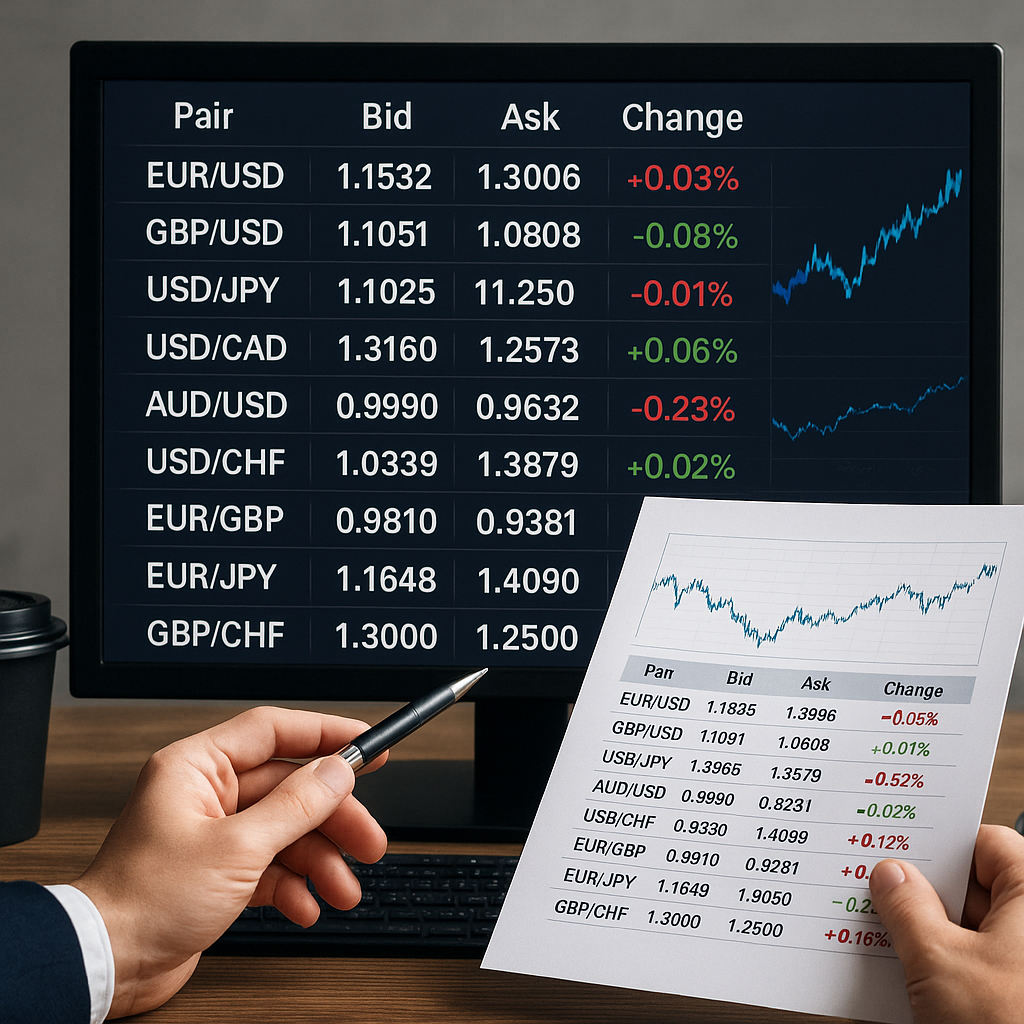
Major market announcements can send shockwaves through the Forex world, triggering rapid price swings and creating both opportunities and risks for traders. Successfully navigating these events requires a blend of strategic planning, in-depth research, and disciplined execution. This article will guide you through the essential steps to prepare for high-impact economic releases and policy statements, helping you stay ahead of the curve and seize profitable moments in the foreign exchange arena.
Understanding Major Market Announcements
To trade effectively around significant events, you first need to know what drives market reactions. Central bank decisions, inflation reports, employment figures, and GDP releases are among the most influential announcements. Each one can spur dramatic changes in currency valuations due to shifts in interest rate expectations and investor confidence.
Key Economic Indicators
- Employment Data: Non-Farm Payrolls (NFP) and unemployment rates often trigger bursts of volatility as they reflect labor market health.
- Inflation Reports: Consumer Price Index (CPI) and Producer Price Index (PPI) influence central bank rate decisions, affecting currency strength.
- GDP Releases: Growth rates signal economic momentum, with higher-than-expected figures typically boosting a nation’s currency.
- Retail Sales: Consumer spending drives a large portion of economic activity, making these figures crucial for traders.
Market Reaction Mechanisms
When an announcement deviates from consensus forecasts, traders reassess future yield differentials and portfolio allocations. This reassessment often leads to surges or plunges in currency pairs. Understanding the relationship between news flow and price movement is vital for anticipating market sentiment shifts.
Developing a Robust Trading Strategy
A structured approach reduces guesswork and emotional bias, two pitfalls that often plague FX traders during high-impact events. By combining fundamental insights with technical frameworks, you can outline clear entry and exit points.
Pre-Announcement Preparation
- Consult your news calendar to mark timing and expectations for each economic release.
- Monitor economic indicators in the days leading up to the event for any evolving trends.
- Define acceptable volatility levels and adjust your position sizing accordingly to manage liquidity constraints.
Entry and Exit Rules
- Establish precise trigger conditions for entry, such as a breakout beyond a consolidation range or a rebound from a key support/resistance level.
- Use limit orders to capture favorable prices or stop orders to protect against adverse moves.
- Implement profit targets and stop-loss orders to ensure you lock in gains or curtail losses before they escalate.
Scenario-Based Planning
Develop alternative strategies for different outcomes: better-than-expected, in-line, or worse-than-expected. For example, if CPI comes in stronger than forecast, you might look to buy the currency ahead of further Fed or ECB tightening. Conversely, weaker data could trigger short positions. Outlining these scenarios in advance helps you react rationally when volatility spikes.
Risk Management and Emotional Discipline
High-impact announcements can amplify trading psychology challenges, from fear of missing out to panic-induced liquidation. Ensuring robust risk controls and mental fortitude is just as important as strategic planning.
Position Sizing and Leverage
- Adopt conservative position sizing to limit exposure in case of erratic price swings.
- Avoid excessive leverage, as it can multiply losses if the market moves sharply against you.
- Regularly review margin requirements to prevent forced liquidations during peak volatility.
Maintaining Emotional Equilibrium
Implement routines to manage stress, such as step-by-step checklists and post-trade reviews. By adhering to predefined rules, you reduce the risk of emotionally-driven decisions that can erode your capital.
Tools and Resources for Informed Trading
Equipping yourself with the right tools ensures you have timely data and analytical capabilities to make informed decisions under pressure.
Real-Time Data Feeds
- Subscribe to premium data feeds that minimize delays and give you a competitive edge.
- Utilize economic calendars that provide consensus estimates and historical comparisons.
Analytical Platforms and Indicators
- Leverage charting tools with customizable indicators to track breakout patterns and volume spikes.
- Employ sentiment analysis tools to gauge market consensus and positioning.
News and Research Services
- Follow reputable research houses and central bank communications for nuanced insights into future policy directions.
- Leverage social media sentiment trackers to discern retail and institutional positioning in real time.