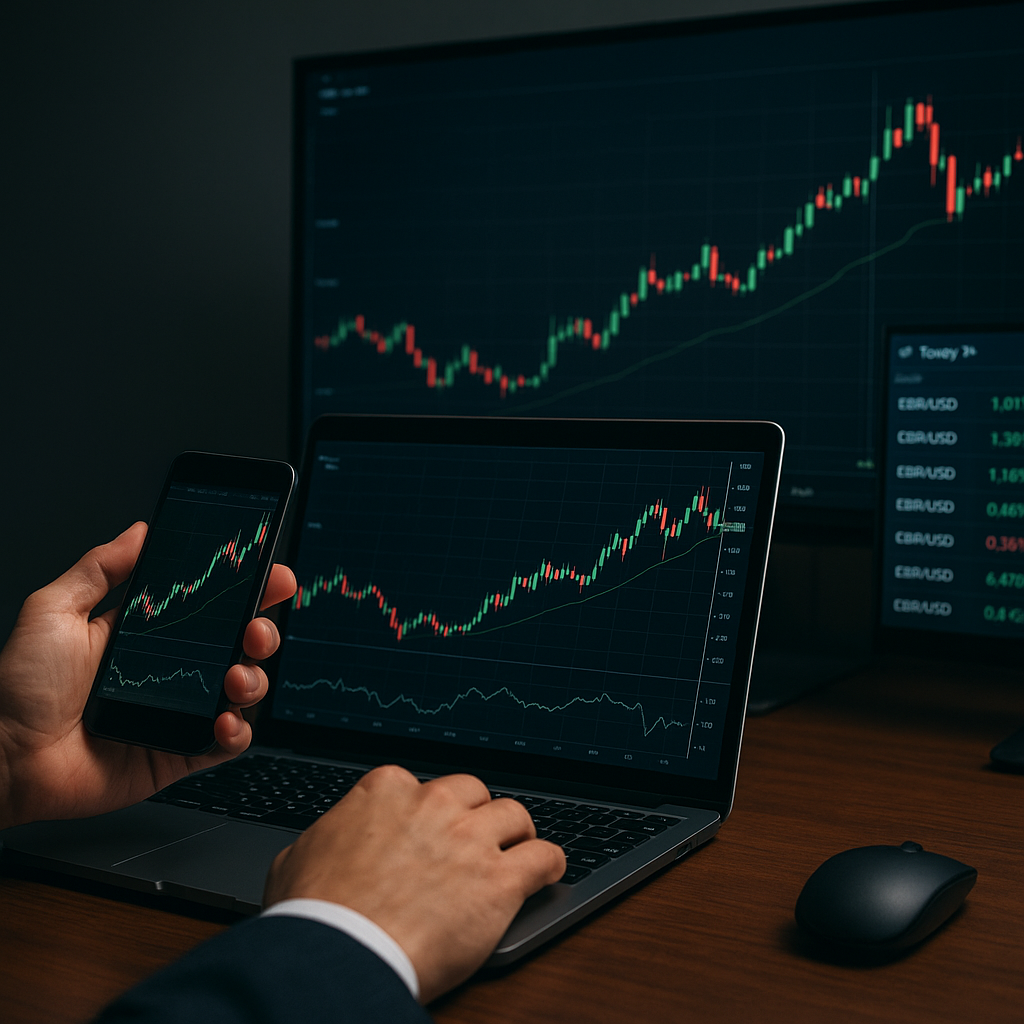
High-frequency trading in the foreign exchange market has transformed the way currencies are bought and sold, harnessing cutting-edge technology and sophisticated strategies to achieve lightning-fast transactions. By leveraging advanced systems, traders aim to capitalize on minuscule price movements, executing thousands of orders within fractions of a second. This article explores the fundamental concepts, mechanics, benefits, challenges, and evolving landscape of high-frequency trading in forex.
What High-Frequency Trading Means in Forex
High-frequency trading (HFT) refers to a subset of algorithmic trading characterized by the use of powerful computers to execute a large number of orders at extremely high speeds. In the foreign exchange market, HFT strategies can include arbitrage approaches, market making, and momentum detection. The primary objective is to exploit brief inefficiencies and price discrepancies that exist for mere microseconds, generating profits by scaling these opportunities across many trades.
At its core, HFT relies on three pillars:
- Algorithms: Complex mathematical models that identify trading opportunities and make split-second decisions.
- Infrastructure: State-of-the-art hardware and network setups designed to minimize latency.
- Data Streams: Real-time market feeds that provide up-to-the-moment quotes, order book data, and economic indicators.
How High-Frequency Trading Systems Operate
Implementing a successful HFT operation demands meticulous integration of software and hardware. Below are the key components:
- Co-location and Direct Market Access: Many HFT firms lease rack space in data centers adjacent to exchange servers, reducing signal travel time to just a few microseconds.
- Low-Latency Networks: Harnessing fiber-optic cables, microwave links, and proprietary communication protocols designed to minimize delays.
- Proprietary Algorithms: Machine learning models and statistical techniques scan multiple currency pairs simultaneously, detecting fleeting arbitrage or momentum signals.
- Execution Platforms: Specialized electronic trading systems capable of handling massive order flows per second while maintaining rigorous risk controls.
By combining these elements, HFT participants play the role of market makers, providing liquidity to the market and narrowing bid-ask spreads. When executed effectively, these strategies can generate consistent, albeit small, profit per trade multiplied by the volume of transactions.
Key Strategies in Forex HFT
High-frequency traders employ several specialized strategies to navigate the fast-paced environment of the forex market:
- Statistical Arbitrage: Exploiting price divergences between correlated currency pairs or between spot and futures markets.
- Momentum Ignition: Initiating small trades to trigger other participants’ algorithmic responses and then profiting from the resulting short-term price movements.
- News-Based Trading: Utilizing sophisticated natural language processing to interpret economic releases and news events instantly, positioning orders before traditional traders can react.
- Latency Arbitrage: Capitalizing on differences in quote speeds from various liquidity providers or trading venues.
Benefits and Drawbacks of High-Frequency Trading
HFT has reshaped modern forex markets, offering distinct advantages and posing significant challenges:
- Enhanced Liquidity: By continuously placing buy and sell orders, HFT firms often increase overall market depth.
- Tighter Spreads: Competition among algorithmic traders can drive transaction costs down for all participants.
- Price Efficiency: Rapid corrections of pricing anomalies contribute to more accurate exchange rates.
- Technological Arms Race: Substantial investments in infrastructure favor well-capitalized firms, creating potential barriers to entry.
- Market Volatility: Rapid-fire orders can exacerbate sudden price swings during periods of low liquidity or unexpected news.
- Operational Risks: Complex systems are vulnerable to software bugs, connectivity failures, or erroneous algorithmic logic.
Regulatory and Ethical Considerations
Regulators worldwide have taken notice of HFT’s impact on the financial ecosystem. Ensuring fair and orderly markets requires balancing innovation with oversight:
- Order-to-Trade Ratios: Imposing limits on the number of orders relative to executed trades to discourage order spamming.
- Minimum Resting Times: Mandating that quotes remain live for a specified duration to prevent fleeting orders.
- Market Surveillance: Implementing real-time monitoring tools to detect manipulative practices such as spoofing or layering.
- Transparency Requirements: Requiring disclosures about algorithmic strategies and risk controls to maintain market integrity.
Ethical debates center on whether HFT provides genuine market value or simply exploits technological inequities. Critics argue that smaller traders lack the resources to compete on equal footing, while proponents highlight the efficiencies introduced by high-speed trading.
Emerging Trends and the Future of Forex HFT
As technology continues to evolve, high-frequency trading in forex adapts accordingly:
- Machine Learning Integration: Developing adaptive algorithms that refine themselves based on incoming data patterns.
- Blockchain and Digital Currencies: Exploring HFT opportunities in cryptocurrency markets and decentralized exchanges.
- Quantum Computing Prospects: Investigating the potential for quantum algorithms to further accelerate trade execution and strategy optimization.
- Cross-Asset Strategies: Combining currency trading with equities, commodities, or fixed-income instruments to enhance diversification and risk management.
Ongoing innovation will challenge regulators to stay ahead of emerging risks, while market participants must continually upgrade their systems to maintain a competitive edge. The balance between speed, fairness, and stability will define the next chapter in the evolution of high-frequency trading within the global forex landscape.