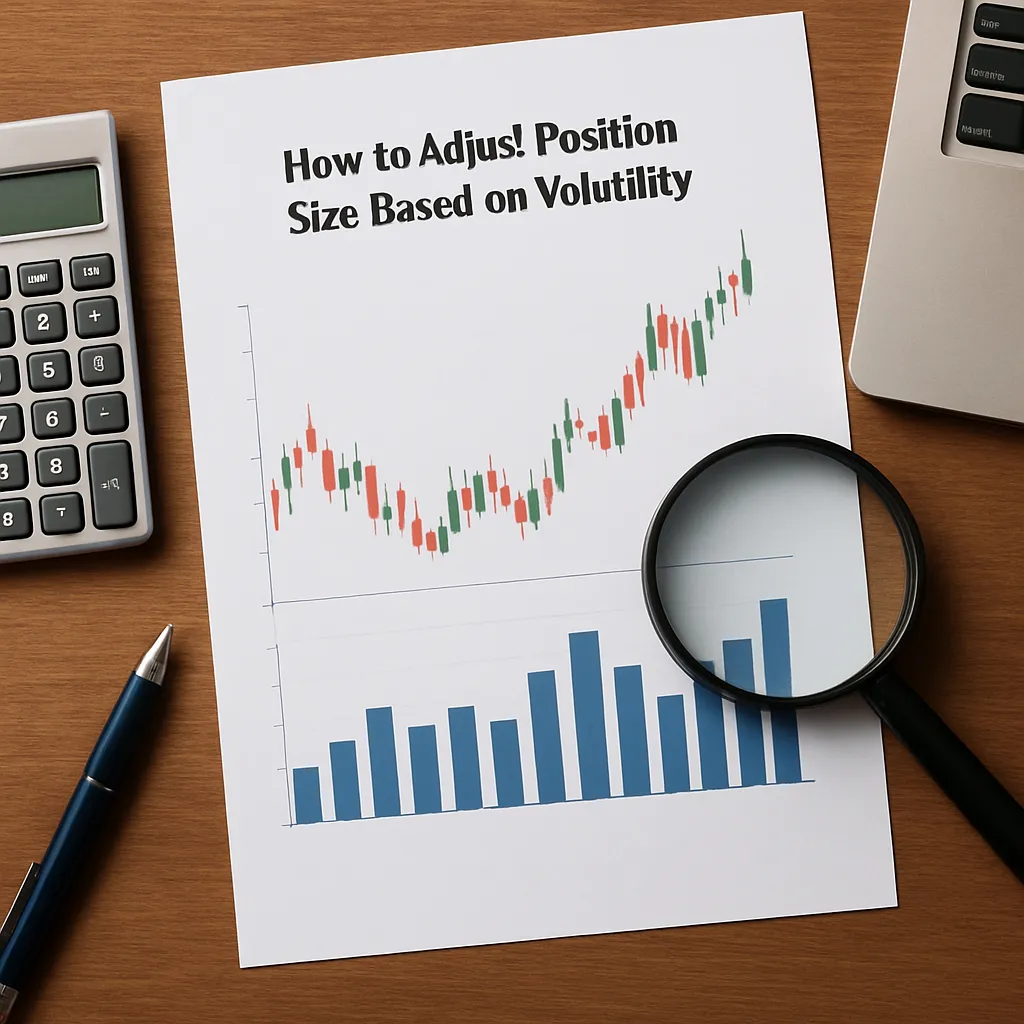
Adjusting position size in foreign exchange trading is a pivotal component of effective risk management. By considering recent price swings and market dynamics, traders can safeguard their capital and align their strategies with market reality. This guide delves into the principles and practical steps required to tailor your position size according to volatility.
Understanding Market Volatility
At its core, volatility quantifies the magnitude of price movements within a given timeframe. In forex markets, volatility may vary dramatically between major currency pairs such as EUR/USD and exotic crosses, reflecting differences in liquidity, economic releases, and geopolitical events.
Key points to grasp about volatility:
- Implied vs. historical volatility: Implied volatility is derived from option prices, while historical volatility is based on past price action.
- Volatility clustering: Periods of high volatility tend to be followed by high volatility, and low by low.
- Event-driven volatility spikes: Data releases, central bank decisions, or unexpected news can trigger sharp moves.
Failing to account for shifting volatility can lead to excessive risk when markets surge or reduced profitability during quiescent phases.
Calculating Volatility Measures
To adjust your position size, you need reliable metrics. Two of the most commonly used indicators are Average True Range (ATR) and standard deviation.
Average True Range (ATR)
The ATR computes the average of true ranges over a specified period, capturing gaps and limit moves:
- True range = max(high – low, |high – previous close|, |low – previous close|).
- ATR is the moving average of true range values, often over 14 periods.
A higher ATR signifies wider swings and suggests smaller positions, while a lower ATR may permit larger stakes.
Standard Deviation
Standard deviation measures dispersion around a mean price:
- Calculate the mean price over N periods.
- Compute the squared differences from the mean, average them, then take the square root.
- Greater dispersion equals higher volatility.
Standard deviation is often used in conjunction with Bollinger Bands to visualize volatility bands on the chart.
Position Sizing Techniques
Position size refers to how many units or lots you trade. When volatility fluctuates, position sizing must adapt to maintain consistent drawdown levels.
Fixed Fractional Method
With this approach, a trader risks a fixed percentage of their account per trade (e.g., 1%). Calculation steps:
- Determine risk per trade = account size × risk percentage.
- Define stop-loss in pips based on ATR or technical level.
- Position size (lots) = risk per trade ÷ (stop-loss in pips × pip value).
This method automatically reduces position size when volatility increases and vice versa.
Volatility-Adjusted Sizing
This technique directly incorporates a volatility reading:
- Calculate ATR (or standard deviation) for your chosen timeframe.
- Establish a volatility factor: e.g., target risk in dollars ÷ ATR.
- Position size = volatility factor × contract size.
By normalizing risk to volatility, traders ensure that each trade carries comparable true exposure regardless of market conditions.
Implementing a Volatility-Based Sizing Model
Building a repeatable model requires disciplined execution. Follow these steps:
- Data Collection: Gather historical price data for the currency pair and compute volatility indicators for various timeframes (e.g., daily ATR over 14 days).
- Risk Definition: Choose a fixed percentage or dollar amount you’re willing to risk per trade, consistent with your overall money management plan.
- Stop-Loss Placement: Place stops at logical technical levels (support/resistance) or a multiple of ATR (e.g., 1.5 × ATR).
- Size Calculation: Use spreadsheet formulas or your trading platform’s built-in risk tools to determine lot size based on volatility measure and stop-loss distance.
- Leverage Considerations: High leverage can amplify gains and losses. Always account for margin requirements and potential margin calls when sizing positions.
- Execution: Enter the trade with the calculated lot size. Ensure your platform confirms the stop-loss and position size accurately before confirming.
Adapting to Different Market Conditions
No single approach works in all scenarios. Seasonal patterns, economic cycles, and liquidity regimes demand continuous calibration of your model:
- During major news events, widen your stop-loss proportionally to volatility spikes to avoid premature exits.
- In low-volatility times, avoid overtrading; wait for setups with clear risk-reward ratios.
- Backtest your sizing model across various market phases to validate its robustness and identify weaknesses.
- Periodically review account performance metrics—maximum drawdown, win rate, profit factor—to adjust risk parameters if needed.
By combining these elements—volatility measurement, position sizing rules, and adaptive adjustments—you can develop a comprehensive framework that aligns trade size with real-time market behavior, ensuring coherent and consistent exposure management.