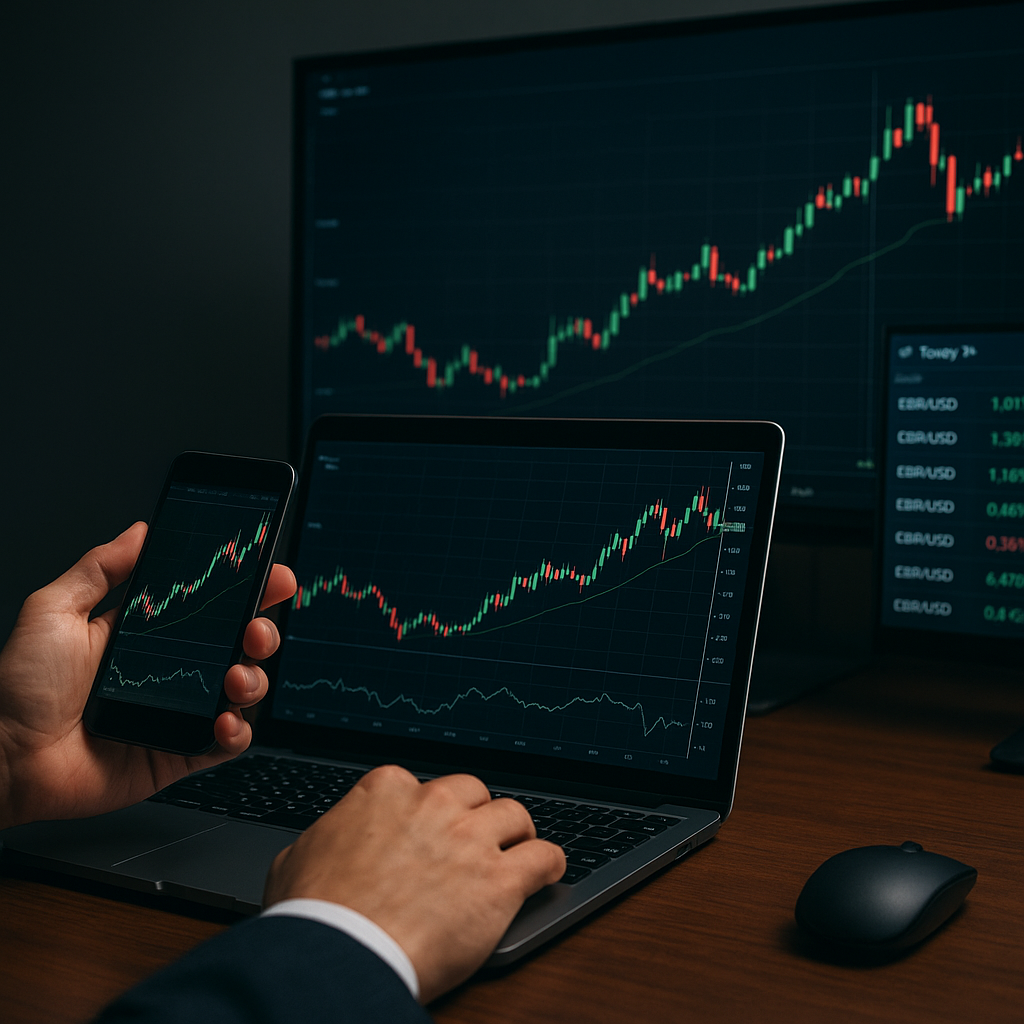
Algorithmic trading in the foreign exchange market has transformed the way traders interact with currency pairs, introducing speed, precision, and systematic discipline. By leveraging computer programs and mathematical models, participants can identify opportunities, manage risk, and execute trades without human emotion. This article explores the core principles, popular techniques, risk considerations, implementation steps, and emerging trends shaping this revolutionary approach to FX trading.
Fundamental Concepts and Mechanisms
At its heart, algorithmic trading relies on predefined rules coded into software that monitors price movements, market depth, and other indicators to trigger buy or sell orders. These instructions can range from simple moving average crossovers to complex quantitative strategies involving statistical arbitrage. The objective is clear: achieve consistent, objective decision-making while minimizing latency and slippage.
Within the foreign exchange ecosystem, algorithms connect with electronic communication networks (ECNs) and prime brokers to access deep pools of liquidity. This liquidity ensures that orders are executed at or near the intended price, even for large volumes. Through precise timing and rigorous backtesting, traders can calibrate their models to adapt to different market regimes, whether calm or highly volatile.
Popular Strategy Categories
- Trend Following: Identifies sustained price momentum and places orders in the direction of movement. Common tools include moving averages, momentum oscillators, and breakout filters.
- Mean Reversion: Assumes price will revert to an average or equilibrium level after extreme deviations. Techniques involve Bollinger Bands, RSI thresholds, and pairs trading to exploit temporary mispricings.
- Statistical Arbitrage: Trades correlated currency pairs by detecting divergences in their historical relationship. Requires rigorous statistical models and backtesting to validate co-integration over different time frames.
- High-Frequency Trading: Executes a large number of small, rapid-fire transactions to capture micro-spreads. Success depends on ultra-low latency connections, colocation services, and advanced hardware.
- News-Based Models: Parses economic releases, central bank announcements, and geopolitical events using natural language processing. Orders are triggered based on sentiment scores and anticipated volatility spikes.
Risk Management and Regulatory Compliance
Effective risk management is paramount in algorithmic environments, where automated systems can amplify losses as quickly as gains. Key elements include:
- Position Sizing: Algorithms must dynamically adjust trade size based on account equity, volatility, and drawdown thresholds.
- Stop-Loss and Take-Profit: Predefined exit rules guard against runaway losses and secure profits within target ranges.
- Exposure Limits: Establish hard caps on total open positions in any one currency or group of correlated pairs.
- Stress Testing: Simulate historical market shocks, flash crashes, and extreme liquidity dries to assess resilience.
- Regulatory Oversight: Ensure adherence to rules set by authorities like the CFTC, FCA, or ASIC, including pre-trade risk controls and accurate reporting.
By combining these safeguards with real-time monitoring, trading firms can detect anomalies, such as errant orders or connectivity issues, and intervene before substantial capital is at risk.
Implementation Workflow and Infrastructure
Bringing an algorithmic trading strategy from concept to live execution involves multiple critical stages:
1. Research and Development
Analysts and quants formulate hypotheses based on market behavior, economic theory, or statistical patterns. Data scientists gather historical tick data, order book snapshots, and macroeconomic indicators to explore potential edges.
2. Backtesting and Optimization
Using high-quality data, developers subject models to rigorous backtesting across diverse market conditions. They tune parameters to balance returns against drawdowns, avoid overfitting, and ensure robustness to out-of-sample periods.
3. Simulation and Paper Trading
Before risking capital, strategies run in simulated environments or paper accounts to validate performance under live data feeds. Traders assess slippage, latency, and order fill rates in realistic market settings.
4. Deployment and Execution
Once validated, algorithms are deployed to servers close to exchange gateways for optimal speed. They connect to forex brokers or ECNs via FIX or proprietary APIs to send and receive orders. Sophisticated routing engines decide the best execution path to minimize market impact.
5. Monitoring and Maintenance
Continuous oversight tracks key performance metrics, error logs, and system health. Developers update models to incorporate new data, patch software vulnerabilities, and refine risk parameters as market conditions evolve.
Technological Considerations and Tools
The backbone of any robust algorithmic infrastructure includes:
- Programming Languages: C++ for low-latency kernels, Python or R for rapid prototyping, and Java/C# for integration with enterprise systems.
- Data Providers: Tick-level and aggregated data from vendors such as Thomson Reuters, Bloomberg, or specialized FX data firms.
- Execution Platforms: In-house order management systems (OMS), third-party solutions, or cloud-based services offering scalable resources.
- Analytics Libraries: Machine learning frameworks and statistical packages for feature engineering, model training, and performance analytics.
- Network Infrastructure: Redundant connections, co-location facilities, and direct market access to reduce external delays.
Challenges and Evolving Frontiers
Despite its advantages, algorithmic forex trading faces ongoing hurdles. Market microstructure changes can invalidate long-standing patterns. Elevated competition narrows spreads and erodes traditional edges. Regulatory updates may impose stricter capital requirements, reporting obligations, or risk controls.
Looking forward, innovations in artificial intelligence, reinforcement learning, and alternative data sources such as satellite imagery or social media sentiment promise fresh perspectives. Enhanced cloud computing capabilities and distributed ledger technologies could further democratize access, allowing smaller players to harness sophisticated models once exclusive to large institutions.
In conclusion, mastering automation, maintaining disciplined execution, and adapting to dynamic market volatility remain at the core of successful algorithmic trading in forex. As technology and data science continue to advance, the frontier for innovation and performance in currency markets will only expand.