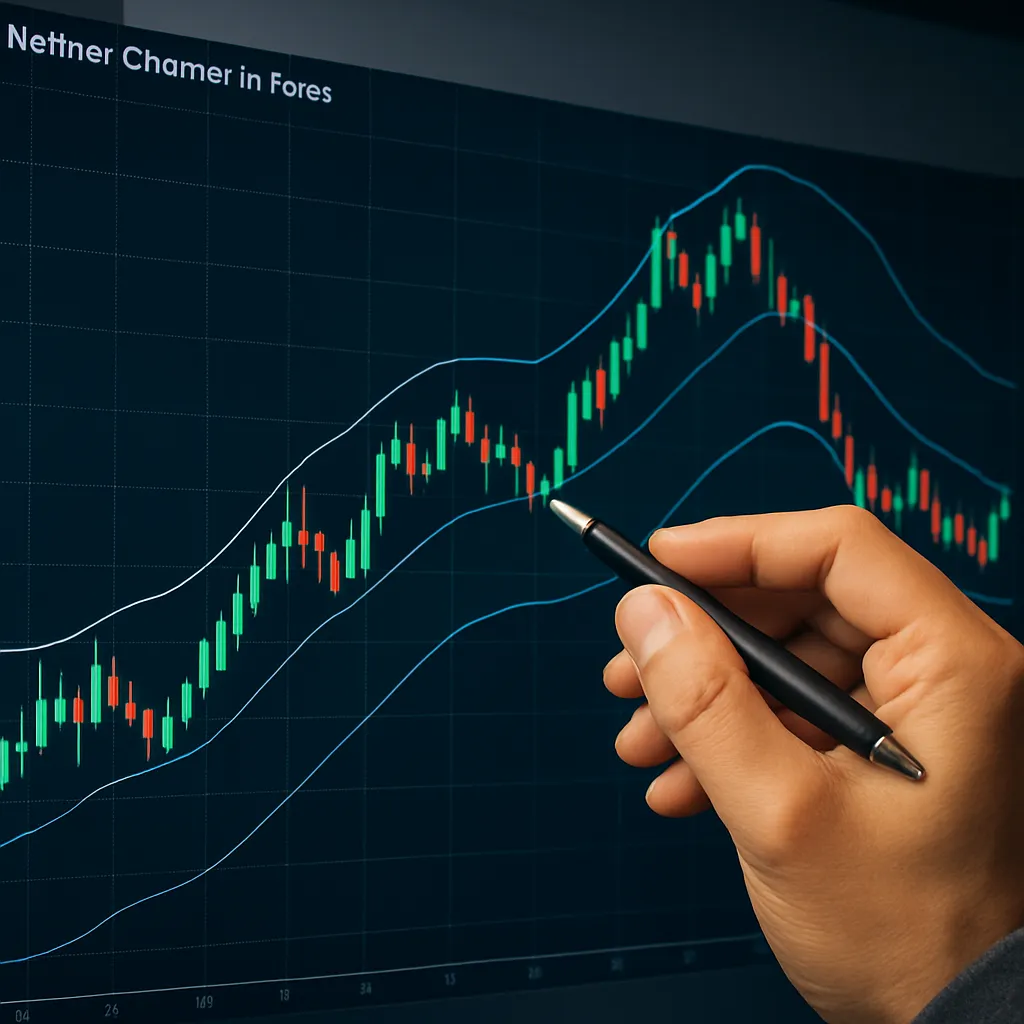
The Keltner Channel stands out as a versatile tool among forex traders seeking to gauge market volatility and pinpoint potential breakouts. Built on the concept of moving averages and channel envelopes, it offers clear visual cues for price dynamics. This article delves into how you can harness the power of the Keltner Channel to refine your entries, exits, and overall risk management in the fast-paced world of currency trading.
Understanding the Keltner Channel Components
At its core, the Keltner Channel consists of three lines: a central moving average, an upper band, and a lower band. Unlike Bollinger Bands, which use standard deviation, the Keltner Channel relies on the Average True Range (ATR) to set its bands. Here’s how each line contributes to your trading insights:
- Central Line: Typically a 20-period Exponential Moving Average (EMA) that highlights the prevailing trend.
- Upper Band: EMA plus a multiple of the ATR (often 1.5 or 2). It marks potential resistance zones where price may pause or reverse.
- Lower Band: EMA minus the same ATR multiple, indicating possible support areas.
By measuring price fluctuations in relation to the ATR, the Keltner Channel adapts smoothly to shifting market conditions. This makes it especially valuable for identifying periods of low volatility, where a squeeze can presage a significant move, or high volatility, when the bands widen dramatically.
Setting Up the Indicator on Your Forex Chart
Prior to deploying the Keltner Channel in live strategies, ensure your platform’s settings align with your trading style:
- Choose an EMA length that matches your timeframe: 20 for medium-term traders, 50 for longer trends.
- Select an ATR multiplier—1.5 tends to balance sensitivity and noise, while 2 can reduce false signals.
- Apply the indicator to liquid pairs like EUR/USD or GBP/JPY to minimize slippage and erratic spikes.
When the bands contract, watch for an upcoming expansion signifying an emerging momentum wave. Conversely, during strong trends, price often “rides” the upper or lower band, offering clues for potential entry or exit timing.
Implementing Keltner Channel Trading Strategies
Channel Breakout Entries
Breakouts occur when the price closes beyond the upper or lower band. To capitalize on this:
- Wait for a candle close above the upper band for a bullish signal, or below the lower band for a bearish trigger.
- Confirm the breakout with increased volume or a momentum oscillator crossover, reducing the risk of false moves.
- Place a stop-loss just inside the channel to limit losses if the breakout fails.
Channel Reversion Plays
In range-bound markets, price often reverts to the trend mean, offering reversal opportunities:
- Look for strong touches of the upper band followed by rejection candlesticks (pin bars or engulfing patterns).
- Enter short when price confirms resistance at the band; similarly, enter long near the lower band on bullish reversal signals.
- Target the central EMA as your initial profit objective, then trail your stop-loss to lock in gains if price continues toward the opposite band.
Enhancing Signals with Confluence
Combining the Keltner Channel with other tools can boost the reliability of your signals:
- Overlay a relative strength index (RSI) to detect overbought and oversold extremes aligned with channel touches.
- Use horizontal support and resistance lines: a channel breakout near a significant level carries more weight.
- Integrate Fibonacci retracement levels to identify potential pullback zones inside the channel for more precise entry spots.
Risk Management and Position Sizing
A robust approach to risk management is indispensable when trading Keltner Channel setups:
- Never risk more than 1–2% of your account on a single trade. Adjust your position size based on the distance between your entry and stop-loss.
- Monitor correlation between currency pairs to avoid overexposure in a single direction.
- Use trailing stops once a trade moves in your favor, locking in profits as price hugs the channel band.
By rigorously controlling risk, you ensure long-term resilience, even if you encounter occasional false breakouts or abrupt reversals.
Adapting to Different Market Conditions
No single indicator excels across all environments. Tailor your use of the Keltner Channel according to market phases:
- During trending periods, favor breakout strategies and let winners run until a clear reversal signal emerges.
- In choppy markets, switch to reversion tactics and tighten stops to avoid extended drawdowns.
- When major economic news is pending, consider narrowing ATR multipliers to reduce vulnerability to sudden spikes.
Staying flexible and aware of overarching market drivers—central bank announcements, geopolitical events, and macroeconomic data—will help you choose the most appropriate channel-based tactic.
Conclusion
Implementing the Keltner Channel in your forex trading arsenal can sharpen your awareness of volatility shifts, momentum surges, and critical support/resistance zones. Whether you pursue breakout entries or mean-reversion plays, combining the channel with disciplined risk management and complementary indicators empowers you to navigate currency markets with greater confidence and precision.