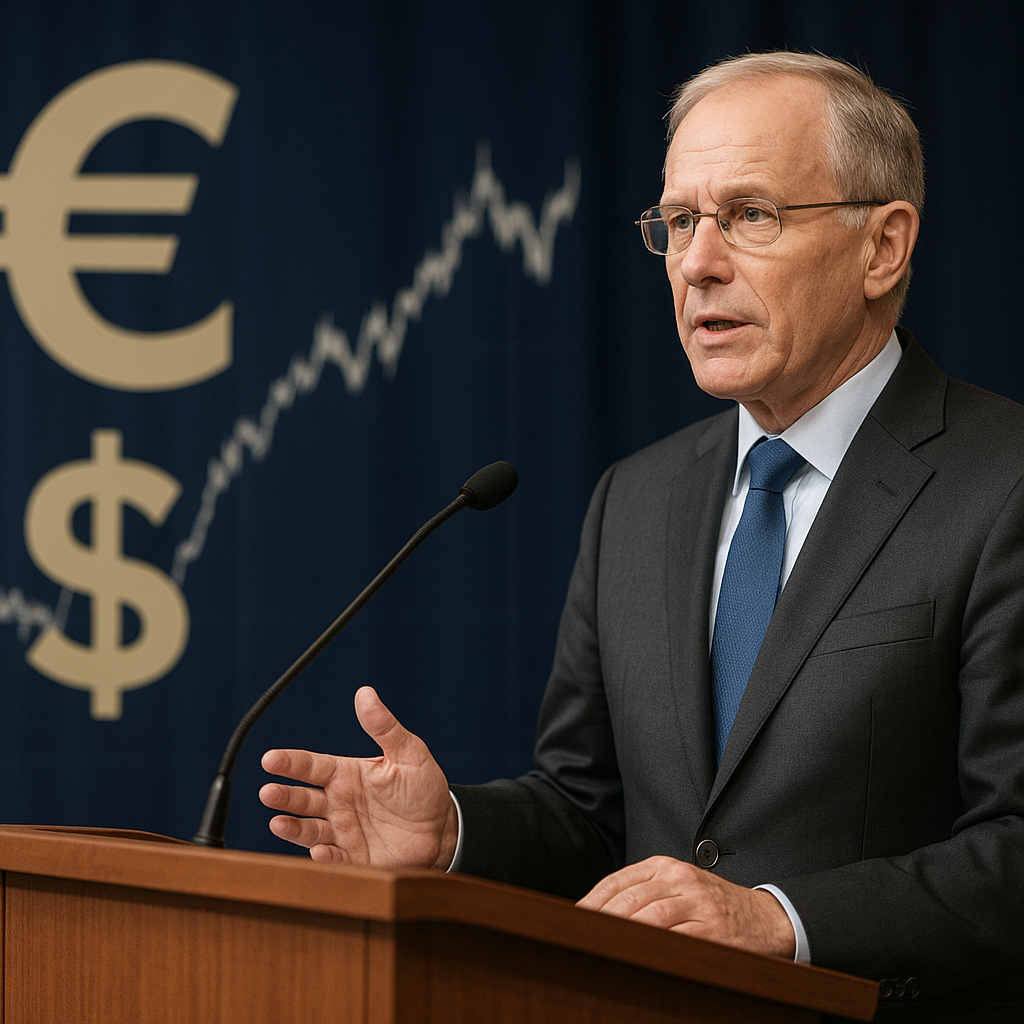
Central bank speeches have evolved into pivotal events that can trigger significant swings in currency markets. Traders, analysts, and policymakers closely dissect every nuance to gauge future monetary stance, anticipating shifts in interest rates and overall economic direction. Such communications not only reflect policy deliberations but also shape market sentiment, driving adjustments in capital flows and impacting exchange rates across major and emerging markets.
Understanding Central Bank Communications
Monetary authorities around the world employ speeches, press conferences, and minutes to articulate their outlook on inflation, growth, and financial stability. Effective communication helps reduce uncertainty, but any ambiguity can amplify volatility. Currency traders interpret these signals to refine their positions, often leveraging derivatives to hedge potential adverse moves or to speculate on prospective policy changes. Recognizing the components of central bank rhetoric provides a framework for anticipating market reactions.
The Role of Speeches
Unlike formal policy statements, speeches allow central bank governors and board members to elaborate on economic assessments and offer forward guidance. They may emphasize risks related to employment, consumer spending, or global capital flows, providing insights into the likely trajectory of key policy variables. Participants monitor:
- Tonal shifts—hawkish versus dovish language
- References to inflation targets and financial stability
- Data dependencies—whether upcoming macroeconomic data will alter decisions
- Quantitative easing or tightening preferences
- External risk factors, such as geopolitical tensions or supply chain disruptions
Mechanics of Public Address
Modern speeches may accompany slides or economic projections, adding layers of complexity. Central banks often coordinate their communication channels:
- Pre-speech statements explaining agenda items
- Live webcasts with Q&A sessions offering real-time clarifications
- Post-event transcripts that reveal comments trimmed or altered during the live broadcast
These elements collectively shape market expectations and dictate the immediacy of currency moves. Protocol differences among institutions mean that investors trading the euro, yen, pound, or emerging market currencies must adapt to each bank’s communication style.
Mechanisms of Currency Impact
When a central bank official discusses raising or lowering interest rates, the ripple effects occur through various channels. Short-term yields can jump or drop, altering the carry-trade calculus. A hawkish tone may attract yield-seeking capital, strengthening the domestic unit. Conversely, dovish remarks tend to undermine a currency, as traders price in prolonged low-rate conditions. Beyond yields, committees reference economic growth forecasts and labor market tightness, which factor into currency valuation models.
Immediate Market Reaction
Algorithmic trading platforms scan speeches in real time, parsing keywords and sentiment scores to execute orders within milliseconds. High-frequency traders exploit these signals, generating spikes in trading volume and bid-ask spreads. Rapid feedback loops between price movements and automated systems can magnify volatility, compelling slower participants to adjust limit orders or withdraw liquidity until clarity emerges.
Medium-Term Adjustments
Over days following a major speech, portfolio managers and hedge funds reassess asset allocations. Expectations for rate hikes or cuts feed into yield curves, influencing longer-dated government bonds, cross-currency basis swaps, and options pricing. Currency pairs with central bank divergences—such as the Fed against the European Central Bank—see pronounced moves, as traders reposition to capture interest differentials.
- Speculators may engage in directional trades on dollar, euro, or yen crosses.
- Risk-sensitive currencies, like those of smaller economies, react more dramatically to global liquidity shifts.
- Carry trades unwind or rebuild based on perceived stability of funding currencies.
Strategies for Traders and Risk Management
To navigate the unpredictability of central bank speeches, market participants develop robust frameworks. First, they identify key dates on the economic calendar, marking all scheduled appearances of the central bank’s leadership. Leading up to these events, traders tighten stop-loss protocols or reduce position sizes to curtail potential losses from abrupt moves. Some adopt straddle or strangle option strategies to capitalize on elevated implied volatility without bias on direction.
Preparation and Analysis
A comprehensive research process includes:
- Reviewing minutes and previous remarks for shifts in tone
- Monitoring inflation and employment data against policy targets
- Assessing global developments that might influence decisions
- Consulting market surveys showing rate-hike probabilities
Combined, these steps help form a probabilistic view of likely outcomes and inform position sizing for currency exposures.
Hedging and Diversification
Professional investors deploy multi-layered risk management practices. Hedging tools include:
- Cross-currency swaps to fix borrowing costs
- FX forward contracts to lock in exchange rates
- Currency options to maintain optionality while limiting downside
These measures protect portfolios against adverse spikes, especially in less liquid emerging market currencies. Diversification across uncorrelated currency pairs further dampens idiosyncratic shocks stemming from a single central bank.
Case Examples in Major Economies
Historical episodes illustrate the potency of central bank rhetoric. For instance, a subtle dovish turn by the Bank of England led to a swift depreciation of sterling, amplifying import-cost concerns and feeding back into the inflation outlook. Meanwhile, a surprisingly hawkish speech by the Federal Reserve in late 2022 triggered a rally in the US dollar, straining debt servicing in high-yield markets. In emerging regions, where transparency may lag, any perceived inconsistency between public statements and private guidance can precipitate abrupt capital flight.
Ultimately, central bank speeches serve as both a policy tool and a real-time stress test for currency markets. By mastering the art of interpreting these communications, currency traders and investors can better anticipate moves, align strategies with evolving monetary policy landscapes, and navigate the complex interplay of global financial forces.