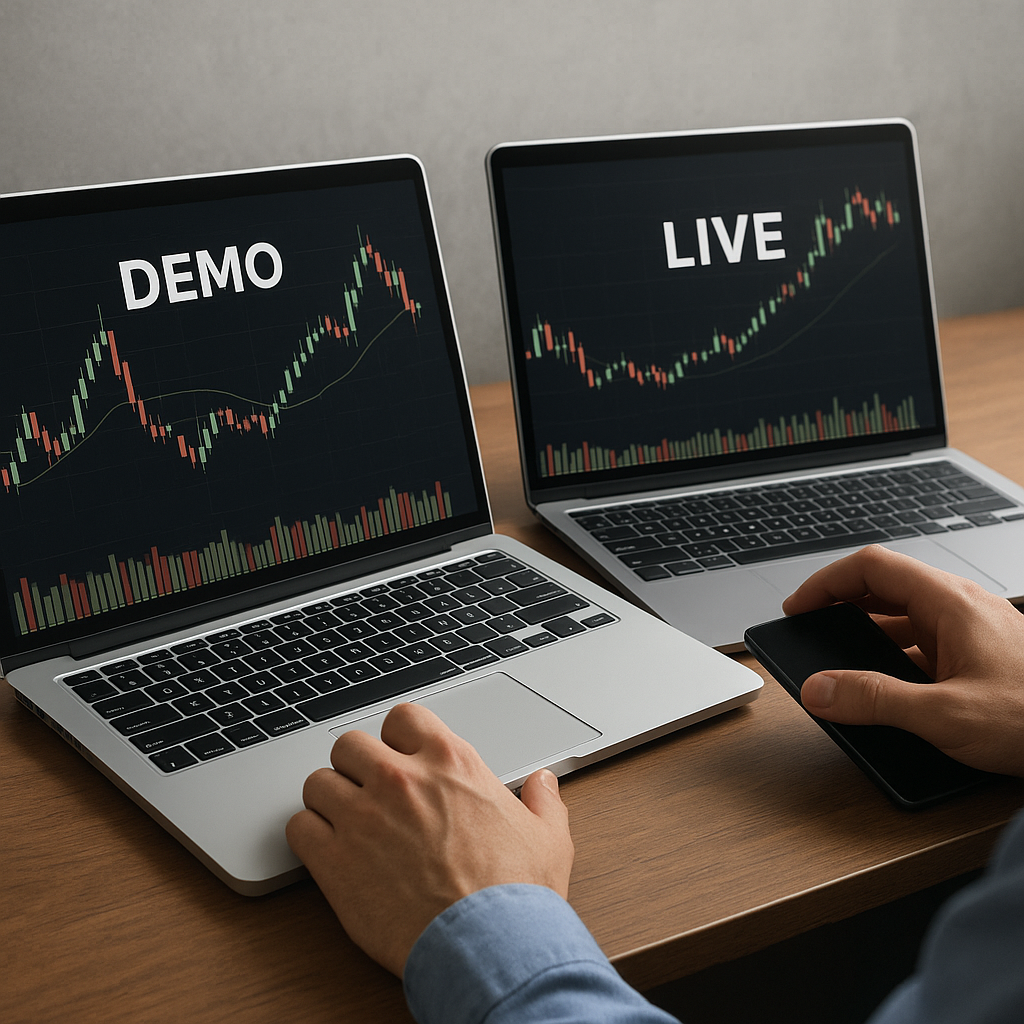
Transitioning from a demo trading account to live forex trading is a critical step for any aspiring trader. While demo platforms offer a risk-free environment to test ideas, real markets introduce factors that can challenge even experienced strategists. This guide explores the essential considerations and actionable steps needed to bridge the gap between simulated success and consistent profitability under live conditions.
Understanding the Key Differences Between Demo and Live Trading
Demo trading provides a controlled setting where traders can experiment with new techniques, evaluate indicators, and refine entry and exit rules without fearing actual losses. However, the jump to a live account brings psychological and operational nuances that simulation environments often fail to replicate.
- Emotions and behavioral biases become more pronounced when real money is at stake. Fear of losing capital may lead to hesitation, while overconfidence can encourage reckless decisions.
- Execution speeds and slippage can vary significantly. On a demo platform, orders often fill at ideal prices. In live markets, liquidity constraints and rapid price movements can cause deviations between intended and actual execution.
- Broker differences matter. Spreads, commissions, and margin policies may not be identical between demo and live accounts, affecting overall cost and potential profitability.
- Leverage decisions carry real consequences. While high leverage can magnify returns in demo, it can also trigger margin calls or wipe out an account instantly in a live environment.
Developing a Comprehensive Trading Plan
A detailed trading plan lays the foundation for consistent performance and fosters discipline in volatile market conditions. It serves as a roadmap that outlines your methodology, risk tolerance, and performance metrics.
Defining Your Strategy and Goals
Your strategy should specify the markets, time frames, and instruments you will trade. Whether employing trend-following systems, range-bound approaches, or breakout tactics, each component must be clearly documented.
- Trade Criteria: Precise conditions for initiating and closing positions.
- Time Management: Schedule daily routines for market analysis, order placement, and review sessions.
- Target Metrics: Define realistic profit and drawdown thresholds per week or month.
Implementing Robust Risk Management
Effective risk management protects your trading capital and ensures longevity in the markets. This involves determining the maximum risk per trade and adopting position-sizing rules that align with your account balance.
- Fixed Percentage Risk: Limiting each trade to 1–2% of total capital helps contain drawdowns.
- Stop-Loss Placement: Set stop orders based on volatility and price structure rather than arbitrary distances.
- Position Scaling: Consider pyramiding positions only when a trade moves favorably, and adjust stops to breakeven.
Cultivating the Right Trading Psychology
Transitioning to live trading demands mastery over your internal landscape. Many traders underestimate the impact of emotions on performance, leading to impulsive actions that deviate from the plan.
- Journaling: Record not only trade details but also your mental state before, during, and after each position.
- Mindfulness Practices: Techniques such as deep breathing or brief meditation can help mitigate stress during high-impact news releases.
- Accountability: Partner with a trading mentor or peer group to review trades and maintain objective oversight.
Building discipline often means accepting small losses without emotional distress and resisting the temptation to chase quick profits. A stable mindset directly impacts your execution quality, ensuring adherence to predetermined entry and exit criteria.
From Backtesting to Live Implementation
Rigorous backtesting and forward testing on a demo account confirm that your methods can withstand various market regimes. Yet, the final step is simulating real-world order flow and trade management under live conditions.
Forward Testing and Paper Trading
Before committing actual funds, conduct forward tests with a small allocation. This hybrid approach blends the realism of live quotes with minimal financial exposure, allowing you to:
- Observe slippage and order execution delays firsthand.
- Adjust risk parameters dynamically as market conditions evolve.
- Validate trade management rules, such as trailing stops or partial exits, in real-time.
Gradual Capital Allocation
A phased funding approach reduces the shock of full-scale live trading. Begin with a modest amount—perhaps 5–10% of your target capital—while keeping the remainder in reserve. As confidence and performance metrics reach predefined benchmarks, incrementally increase your allocation.
- Phase 1: Live start with low leverage and minimal position sizes.
- Phase 2: Scale up post-consistent profitability over a set number of trades or time period.
- Phase 3: Full allocation after meeting long-term objectives without significant emotional strain.
Continuous Learning and Performance Review
Successful traders view learning as an ongoing process. Markets evolve, and so should your strategies. Maintaining a robust review regimen helps identify strengths, weaknesses, and future opportunities for improvement.
- Weekly Reports: Summarize win rates, average returns, drawdown events, and adherence to risk rules.
- Monthly Strategy Audits: Assess whether market conditions still favor your methods or if adjustments are needed.
- Ongoing Education: Participate in webinars, read industry research, and network with other forex professionals.
By systematically refining your methods and keeping an eye on both market dynamics and personal performance, you build a resilient trading framework. This discipline ensures you remain adaptable and prepared for any new challenges that live markets present.