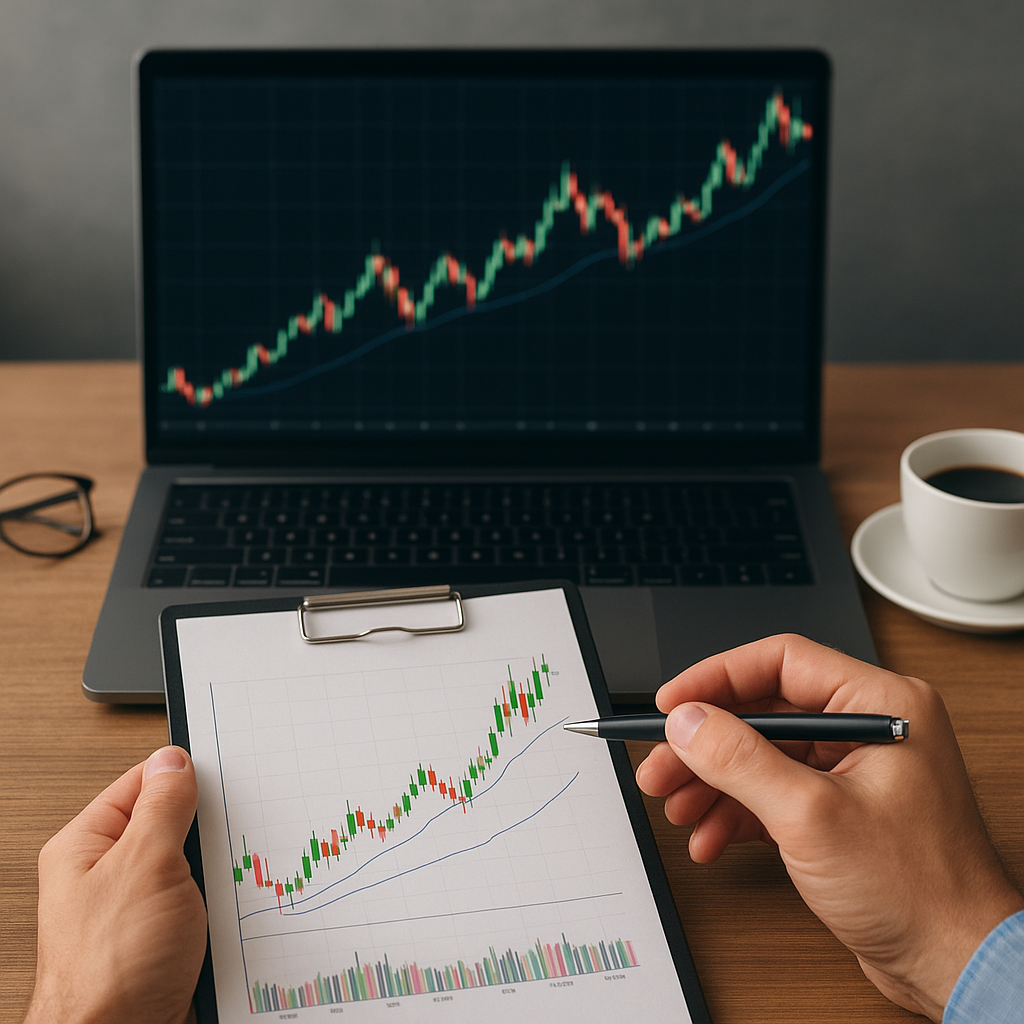
Foreign exchange markets thrive on constant price movements, driven by a blend of economic data, geopolitical developments, and trader sentiment. Understanding the role of volatility can unlock new perspectives for both novice and experienced participants. A robust grasp of how currency pairs fluctuate over time not only enhances decision-making but also sharpens risk awareness. This article delves into the core aspects of volatility, from measurement techniques to strategy adaptation, without relying on standard summaries.
Understanding the Nature of Volatility
Volatility represents the degree of variation in the price of a currency pair within a given period. When a market shows erratic swings, traders say it exhibits high volatility. Conversely, calm and steady movement suggests low volatility. These swings are the product of supply and demand imbalances, news releases, and shifts in investor mood. A sudden central bank announcement can send rates soaring or plunging, illustrating how fragile equilibrium can be when economic forces collide.
Among the primary drivers are interest rate differentials, trade balances, and political developments. As traders react to fresh data, they inject capital into or withdraw it from specific currencies. The ebb and flow of these orders create visible patterns on price charts. Recognizing when liquidity pools are thin helps anticipate potential breakouts or reversals. Combining this insight with technical and fundamental analysis offers a comprehensive view of market dynamics.
Key Metrics for Measuring Volatility
- Standard Deviation
- Average True Range (ATR)
- Bollinger Bands
- Volatility Index (VIX)
- Historical vs. Implied Volatility
Standard deviation calculates the dispersion of price data around its mean. A rising standard deviation indicates expanding price swings and growing risk. Similarly, the ATR gauges the average range between high and low prices over a set number of periods. Traders use ATR to adjust stop-loss orders, ensuring they’re placed beyond normal noise but within acceptable risk boundaries.
Bollinger Bands wrap price action within upper and lower bands set at a defined number of standard deviations. When bands widen, volatility is on the rise, signaling potential trading opportunities. The VIX, sometimes referred to as the fear index, tracks implied volatility on options and can provide a sentiment gauge for currency markets when correlated appropriately.
Impact of Volatility on Trading Strategies
High-volatility conditions often favor scalpers and day traders who aim to capture quick price differentials. Smaller time frames deliver more frequent signals, enabling traders to exploit intraday moves. However, this environment demands rapid decision-making and nimble execution. Low-volatility phases, by contrast, suit swing traders looking for more predictable retracements and breakouts.
Traders employing speculation techniques must calibrate their tools to the current volatility regime. In choppy markets, oscillators such as RSI or Stochastic provide clearer overbought and oversold signals. When volatility spikes, momentum indicators become more reliable, catching strong directional moves. In all scenarios, prudent use of leverage can amplify gains but also magnify losses, highlighting the need for stringent controls.
Risk Management and Volatility Control
Volatility magnifies both profits and losses. Effective risk management frameworks are essential to navigate turbulent periods. Position sizing guidelines, based on a percentage of account equity or fixed monetary risk per trade, help ensure consistent outcome over time. Traders often risk no more than 1–2% of their capital on any single position, limiting exposure when markets gyrate unpredictably.
Stop-loss orders guard against catastrophic drawdowns by automatically closing a trade at a predetermined level. A well-placed stop-loss balances the desire to stay in a winning trade against the need to cut losses swiftly. Trailing stops can lock in profits by moving the exit point in tandem with favorable price movement, preserving gains even if volatility surges unexpectedly.
Technological Tools and Volatility Analysis
The rise of algorithmic trading platforms and sophisticated charting software has transformed how volatility is monitored. Retail and institutional participants leverage real-time data feeds, automated alerts, and backtesting environments to refine entry and exit rules. Many traders incorporate machine learning models to forecast volatility spikes, using historical patterns and news sentiment analysis to anticipate sudden shifts.
Execution algorithms can adjust order placement based on current market depth, ensuring minimal slippage during high-volatility episodes. The integration of artificial intelligence and cloud computing enables adaptive strategies that respond to evolving conditions without constant manual intervention. As a result, participants can capitalize on fleeting opportunities around economic releases and geopolitical developments.
Economic Events and Volatility Spikes
Major economic releases often trigger the most dramatic currency reactions. Scheduled announcements such as First Friday Nonfarm Payrolls in the United States can produce double-digit pip swings within minutes. Traders closely monitor the economic calendar to prepare for these events, adjusting position sizes or hedging exposures beforehand. Other high-impact releases include inflation data, retail sales, and central bank rate decisions.
Geopolitical tensions, election outcomes, and fiscal policy shifts also introduce layers of uncertainty. Unexpected developments—such as sudden trade disputes or landmark court rulings—can ignite volatility across multiple currency pairs simultaneously. Maintaining a clear view of global macro drivers allows traders to anticipate areas of potential stress, reducing the likelihood of being caught off guard by sharp market moves.