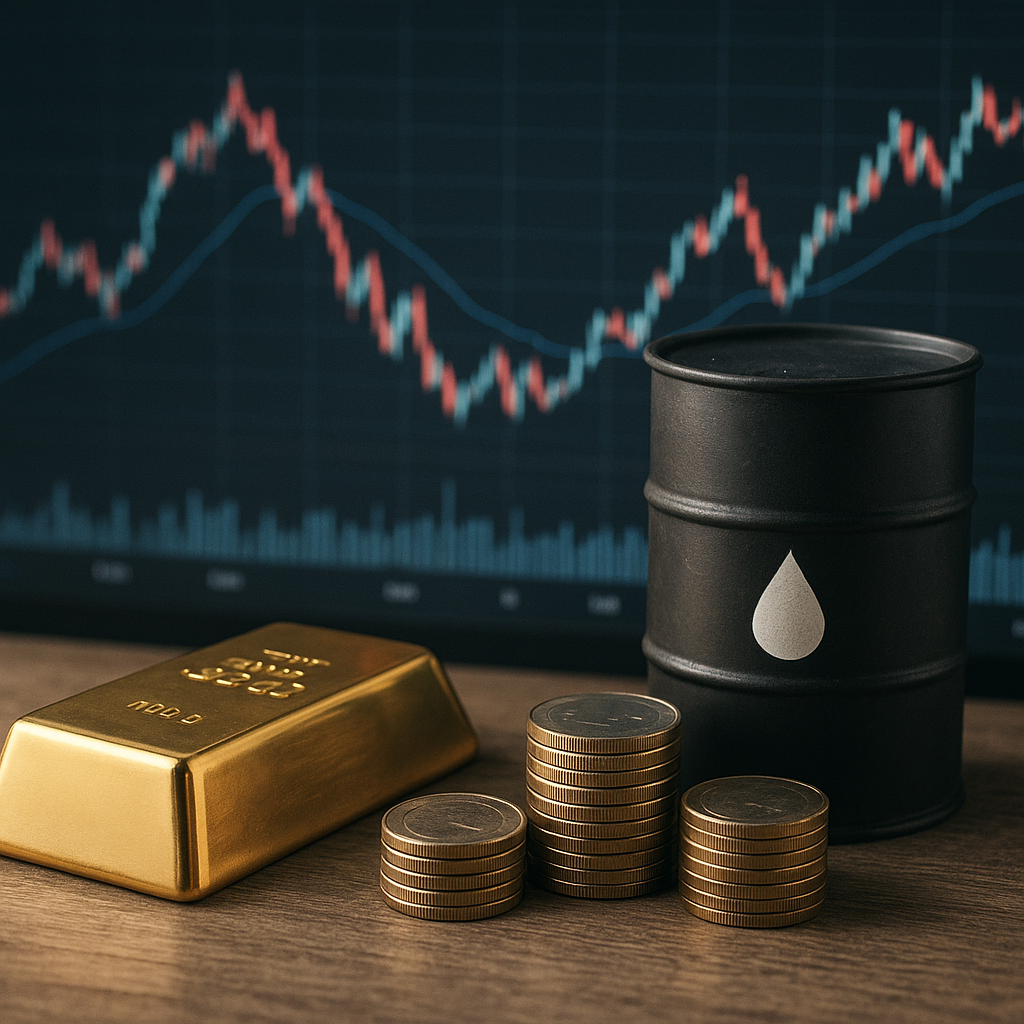
Commodity markets exert a profound influence on global currency dynamics, shaping exchange rates, trade balances, and investment flows. By examining the intricate connections between raw material prices and foreign exchange valuations, traders and policymakers can gain valuable insights into potential market movements. This article explores how shifts in energy, metal, and agricultural commodity prices drive currency strength and weakness, highlights major commodity-linked currencies, delves into trading strategies, and discusses the impact of emerging technologies and policy decisions on these interrelated markets.
The Link Between Commodity Prices and Currency Valuations
Understanding the fundamental relationship between commodities and currencies starts with recognizing that many nations depend heavily on exports of raw materials to fund their economies. When the price of crude oil, copper, or wheat rises, exporters earn more foreign revenue, boosting demand for their local currency. Conversely, a slump in commodity prices can trigger currency depreciation as export proceeds decline. This correlation is especially pronounced in economies where energy or mineral exports contribute a large share of GDP and government revenues.
Market participants often track leading commodity indices—such as the Bloomberg Commodity Index or the S&P GSCI—to anticipate shifts in currency valuations. For example, rising oil prices tend to benefit net exporters like Canada and Russia, while pressuring importers such as Japan and India. Similarly, surging metal prices can support the Australian and Chilean dollars. Recognizing these patterns enables traders to position themselves ahead of central bank meetings, balance-of-payments releases, and inflation reports, all of which may reinforce or counteract commodity-driven currency moves.
In times of heightened volatility, correlations can strengthen, creating opportunities for cross-asset arbitrage. Statistical tools, including rolling-window correlation matrices and principal component analysis, help quantify the strength of commodity–currency linkages. These measures guide traders in constructing portfolios that capture desired exposures while mitigating unintended risks.
Major Commodity-Linked Currencies
Several currencies are renowned for their sensitivity to commodity price swings, earning them labels such as “commodity currencies.” The most prominent examples include:
- Australian Dollar (AUD): Highly responsive to metal and energy prices, particularly iron ore and coal.
- Canadian Dollar (CAD): Closely tied to crude oil and natural gas exports, with bank of Canada policies reflecting commodity revenue trends.
- Norwegian Krone (NOK): Influenced by North Sea oil and gas, with fiscal budgets linked to petroleum yields.
- Russian Ruble (RUB): Dependent on oil and gas export earnings, susceptible to geopolitical events affecting supply.
- Brazilian Real (BRL): Correlated with agricultural and mining exports, including soybeans and iron ore.
- South African Rand (ZAR): Driven by metal prices—particularly gold, platinum, and palladium—and domestic mining sector health.
Evaluating each currency’s trade balance, fiscal health, and monetary policy stance in conjunction with commodity trends provides a comprehensive framework for predicting exchange rate trajectories. Traders also monitor sovereign credit ratings and foreign reserve levels, which can amplify or dampen commodity effects on currency values.
Trading Strategies and Risk Management
Trend-Following Tactics
Trend-following systems capitalize on sustained commodity movements that translate into currency momentum. By applying moving-average crossovers or breakout rules on currency pairs like AUD/CAD or CAD/JPY, traders ride persistent swings while limiting drawdowns through volatility-adjusted position sizing. Backtesting on multi-year datasets ensures that strategies are robust across different commodity cycles.
Hedging with Commodity Derivatives
Corporations and institutional investors often hedge currency risk by using commodity futures and options. For example, an oil exporter might sell WTI futures while simultaneously buying domestic currency forwards, effectively locking in both commodity and FX rates. This dual-hedge approach mitigates profit erosion from adverse price changes and provides greater budget certainty.
Correlation Analysis Tools
Advanced platforms offer real-time heatmaps and correlation scatterplots, allowing traders to visualize shifting relationships between commodity benchmarks and currency pairs. Regularly updating these analyses helps detect regime changes—such as a decoupling of oil and the ruble during geopolitical sanctions—prompting strategy recalibration.
Implementing robust risk management is crucial when trading commodity-linked currencies. Stop-loss orders, dynamic margin adjustments, and stress-testing portfolios against historical shocks help ensure survivability during sudden market reversals. Diversifying exposures across regions and asset classes further enhances portfolio resilience.
Emerging Trends and Technological Innovations
The digital revolution has introduced novel tools for analyzing commodity–currency interactions. Machine learning algorithms can process vast datasets—including shipping routes, inventory reports, and social media sentiment—to forecast price trends with greater accuracy. Algorithmic trading systems execute arbitrage strategies across commodity and FX futures markets in milliseconds, capturing fleeting inefficiencies.
Blockchain-based commodity registries and tokenization platforms aim to increase transparency and reduce settlement risk. By streamlining the transfer of physical asset ownership, these innovations may lead to tighter price discovery processes, thereby enhancing the efficiency of currency markets that depend on commodity flows.
Furthermore, high-frequency traders deploy co-integration models to exploit micro-structural arbitrage between onshore and offshore currency markets in countries like China and Russia, where commodity exports influence both segments differently.
Economic Policy and Geopolitical Factors
Government policies play a decisive role in mediating the commodity–currency nexus. Sovereign wealth fund withdrawals during periods of low commodity revenue can weaken a currency, while fiscal stimuli funded by commodity windfalls may stoke inflationary pressures, prompting central banks to raise interest rates. Such policy shifts often trigger rapid adjustments in exchange rates.
Geopolitical events—sanctions, trade disputes, resource nationalism—can disrupt supply chains, causing commodity price spikes or collapses. Currency markets react swiftly, as witnessed when OPEC decisions send oil-linked currencies into motion within hours. Traders must stay abreast of diplomatic developments, regional conflicts, and environmental regulations that affect commodity production and transport.
Monitoring central bank communications and macroeconomic indicators—employment figures, consumer price indices, and manufacturing output—provides context for interpreting commodity-driven currency moves. In many cases, the interplay between inflation data and commodity price shifts determines the magnitude and duration of foreign exchange volatility.