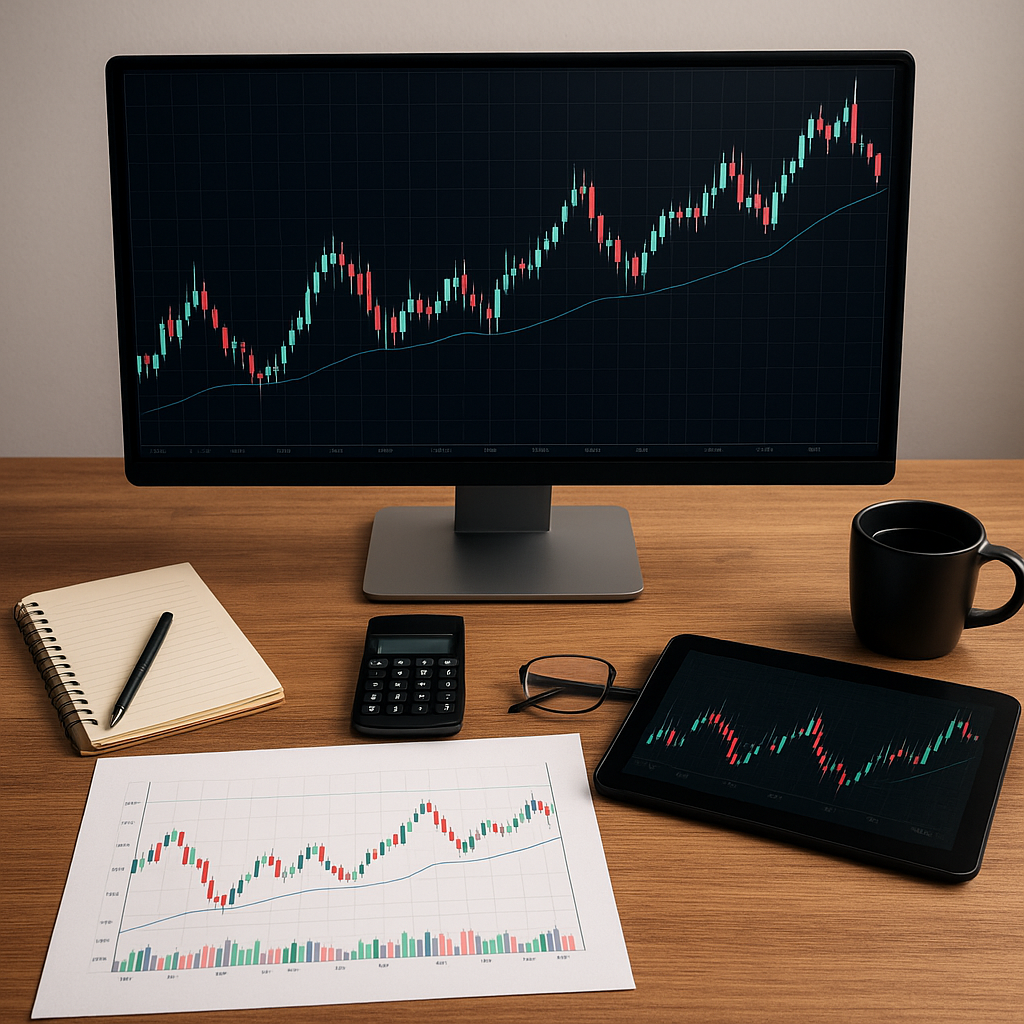
Effective currency traders leverage a suite of powerful tools to parse vast streams of market data, uncover emerging trends, and execute well-timed trades. By understanding the capabilities of leading platforms and integrating advanced methodologies, professionals can gain an edge in the fast-paced world of foreign exchange.
Key Features of Effective Forex Analysis Tools
Comprehensive Data Coverage
Any robust platform must aggregate accurate, up-to-date pricing and economic information across global markets. Traders depend on a blend of technical price feeds, fundamental news releases, and sentiment metrics to form a holistic view. Comprehensive coverage ensures that sudden shifts in central bank policies or unexpected economic indicators won’t catch you off-guard.
Real-Time Analytics and Charting
Speed is paramount when assessing the impact of breaking news on currency pairs. High-performance charting engines deliver interactive candlestick patterns, volume histograms, and depth-of-market views. With real-time updates, traders can confirm breakout signals or fading reversals within milliseconds, facilitating swift decision-making in volatile conditions.
Customizable Indicators
A flexible toolkit of indicators—including moving averages, Bollinger Bands, Fibonacci retracements, and pivot points—allows each trader to tailor analysis to their unique approach. The ability to adjust parameter settings, apply multiple overlays, or combine proprietary formulas can reveal hidden entry points and exit zones on crowded charts.
Automated Alerts and Notifications
Constant monitoring of dozens of currency pairs is impractical without automated systems. By setting up price level alerts, indicator cross triggers, or economic event notifications, traders regain precious time. Alerts can arrive via desktop pop-ups, SMS, or email, ensuring that no critical signal escapes your notice, even when you’re away from the screen.
Top Forex Analysis Platforms and Software
MetaTrader 4 and MetaTrader 5
MetaTrader remains a global standard for retail traders seeking a blend of charting power and automation. Features include:
- Advanced MQL scripting for custom Expert Advisors and algorithms
- Integrated backtesting environments for strategy validation
- Community marketplace offering hundreds of indicators and EAs
- Secure, low-latency order execution on major broker servers
The multi-timeframe analysis and built-in economic calendar streamline both fundamental and technical workflows.
TradingView
TradingView excels at social collaboration and cloud-based charting. Its browser-based interface offers:
- A vast public library of user-generated indicators and scripts
- Dynamic drawing tools and annotation features
- Real-time chatrooms and idea sharing among experienced traders
- Cross-asset analysis spanning Forex, equities, and cryptocurrencies
The platform’s speed and ease of use make it a go-to for those who prioritize community insights alongside raw data.
cTrader
cTrader appeals to institutional-minded traders seeking top-tier execution and depth-of-market visibility. Its advanced features include:
- Level II market depth with detailed order book information
- Built-in algorithmic trading through cAlgo with C# support
- Premium charting modules and automated risk management tools
- Direct connectivity to ECN participants for tighter spreads
By combining transparent pricing with professional-grade analysis, cTrader bridges the gap between retail and institutional standards.
Bloomberg Terminal and Thomson Reuters Eikon
For high-net-worth individuals and institutional desks, Bloomberg and Eikon deliver unparalleled breadth:
- Real-time newswire updates from thousands of global sources
- Advanced volatility surface modeling and options analytics
- Macroeconomic research reports and proprietary sentiment indices
- Integration with fixed income, equity, and commodities monitoring
Although subscription costs can be steep, the depth of data and modeling capabilities justify the investment for serious market participants.
Integrating Advanced Techniques and Strategies
Algorithmic and Quantitative Models
Quant traders rely on statistical arbitrage, machine-learning regressions, and factor-based models. By harnessing fast backtesting engines, these professionals optimize strategies against historical tick data, isolating profitable patterns under specific market regimes. Algorithmic frameworks can automatically adapt position sizing based on volatility or available liquidity.
Machine Learning and AI
Artificial intelligence now powers next-generation analysis tools that can detect nonlinear relationships and evolving market structures. Neural networks and reinforcement learning agents absorb terabytes of price, volume, and sentiment data to forecast short-term movements. When properly trained and validated, these systems can uncover subtle inefficiencies overlooked by traditional methods.
Backtesting and Simulation
Robust backtesting platforms recreate historical conditions down to the spread, slippage, and execution latency. Traders can simulate millions of hypothetical trades to evaluate drawdown profiles, risk-reward ratios, and expectancy metrics. Integrating walk-forward optimization prevents overfitting by testing strategies across multiple unseen data segments.
Risk Management Tools
Even the most sophisticated analysis is incomplete without strict risk controls. Position-sizing calculators, dynamic stop-loss adjustments, and portfolio-level stress tests help traders preserve capital during adverse events. Incorporating risk management modules that alert when predetermined thresholds are breached ensures disciplined adherence to trading rules.
Multi-Timeframe and Correlation Analysis
Understanding interrelationships between currency pairs, equity indices, and commodities can unearth powerful confluence opportunities. Multi-timeframe approaches validate signals on higher timeframes before executing on intraday charts. Correlation heat maps highlight pairs that move in tandem or diverge under specific conditions, aiding in effective hedging strategies.