The Stochastic Oscillator stands as one of the most widely used technical tools for gauging market momentum in the foreign exchange market. Designed to compare a currency pair’s closing price to its high-low range over a specified period, this indicator delivers actionable insights into potential trend reversals, overextended moves, and key entry and exit points. Traders rely on its clear visual cues and statistical underpinnings to develop robust strategies that harness the power of convergence, divergence, and momentum shifts.
Understanding the Stochastic Oscillator
Origins and Calculation Methodology
Developed by George C. Lane in the late 1950s, the Stochastic Oscillator measures the position of the current close relative to the high-low range over a chosen look-back period. The core formula involves two lines: %K, the raw stochastic value, and %D, a moving average of %K. These are computed as follows:
- %K = 100 × (Current Close – Lowest Low) / (Highest High – Lowest Low)
- %D = Simple Moving Average of %K over a defined period
By tracking the proximity of the close price to the range extremes, the oscillator reveals shifts in momentum before price movements become obvious on typical price charts. Values oscillate between 0 and 100, offering a straightforward scale for identifying overbought and oversold conditions.
Key Characteristics and Interpretation
- Overbought territory: Readings above 80 suggest that a currency pair may be overextended to the upside.
- Oversold territory: Readings below 20 indicate potential exhaustion to the downside.
- Divergence: When price makes a new high or low and the oscillator fails to match it, traders spot weakening momentum.
- Crossover: A shift occurs when the %K line crosses above or below the %D line, generating buy or sell signals.
Setting Up the Stochastic Oscillator on Forex Charts
Selecting the Right Platform and Timeframe
Most modern trading platforms offer the Stochastic Oscillator as a default tool under their indicators list. Before diving into analysis, configure these two critical dimensions:
- Timeframe: Shorter periods (e.g., 5-14 candles) increase sensitivity, producing more frequent signals but also more false alerts. Longer periods (e.g., 20-30 candles) filter noise but may lag in reacting to rapid moves.
- Chart Type: Candlestick or bar charts provide clear high and low price references for accurate stochastic calculations.
Adjusting %K and %D Settings
Default settings often consist of %K = 14 periods and %D = 3-period SMA. However, customization can enhance performance depending on the strategy:
- Reduce %K length for faster reaction to price swings—but be prepared to filter out more false signals.
- Increase %D smoothing to improve confirmation of true trend shifts at the cost of slower entries.
- Experiment with signal line types (e.g., EMA instead of SMA) to refine the balance between speed and reliability.
Strategies and Trade Signals
Reversal Trading
In reversal setups, traders look for stochastic readings in extreme zones:
- Buy when the oscillator moves back above 20 from an oversold region, ideally matched by bullish candlestick formations or support zones.
- Sell when it falls below 80 from an overbought zone, corroborated by resistance levels or bearish price action.
Trend-Following Entries
Combining the Stochastic Oscillator with trend analysis enhances its effectiveness:
- During an uptrend, consider long positions when the oscillator dips into 30–40 and then crosses above its signal line.
- In downtrends, short on rallies into the 60–70 zone followed by a bearish crossover.
Divergence Techniques
Divergence between price and oscillator readings often precedes significant moves:
- Bullish divergence: Price makes lower lows while the oscillator posts higher lows. Look for confirmation in a %K crossover and supportive volume metrics.
- Bearish divergence: Price sets higher highs but the oscillator fails to keep pace. A subsequent %K drop below %D strengthens the sell thesis.
Common Pitfalls and Risk-Management Practices
Filtering False Signals
Rapid price swings in the Forex market can trigger premature stochastic crossovers. To reduce whipsaws:
- Combine the oscillator with moving averages or trendlines for additional confirmation.
- Avoid trading exclusively off extreme readings during highly volatile news events.
- Require crossovers to occur outside of extreme zones (e.g., above 50 in an uptrend) to align with dominant market direction.
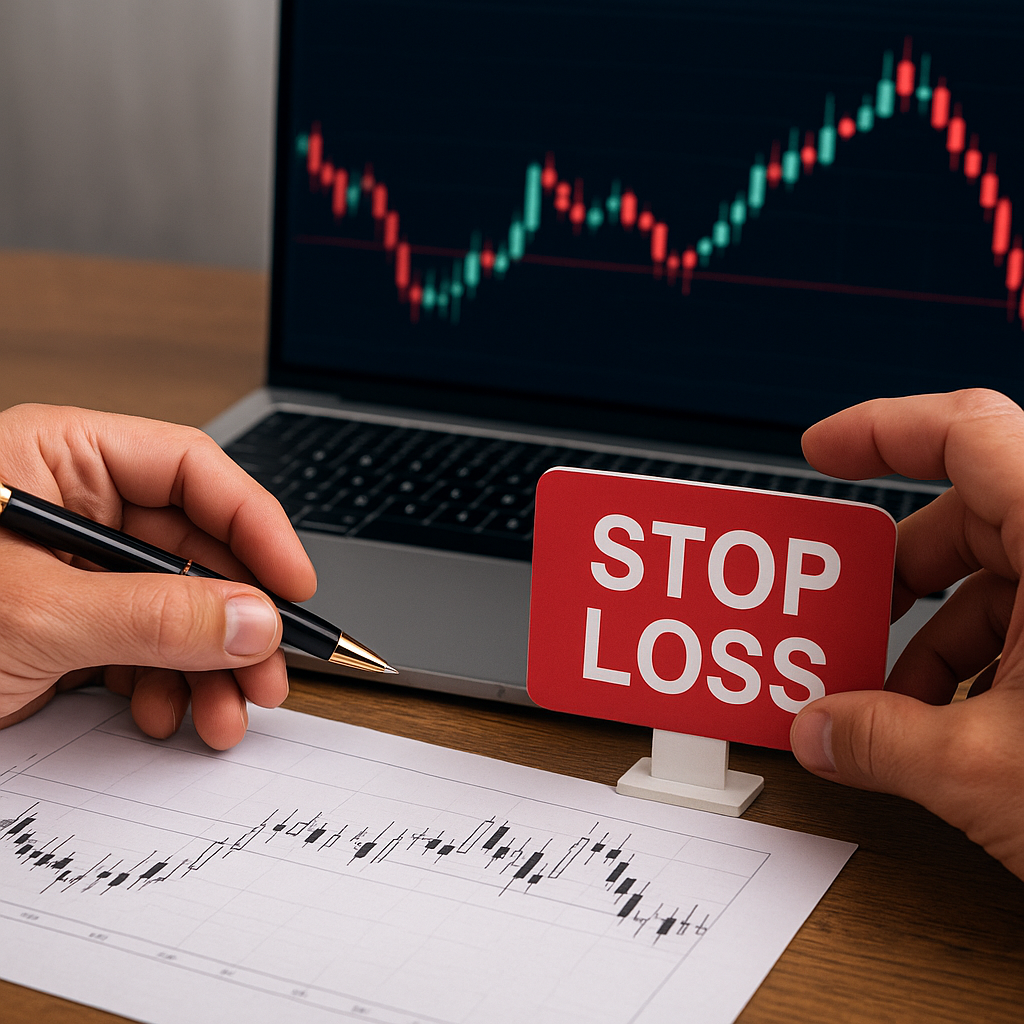
Position Sizing and Stop Placement
Effective risk-management starts with appropriate position sizing and precise stop-loss levels:
- Position size based on a fixed percentage of account equity to limit downside on any single trade.
- Place stops below recent swing lows or above swing highs, accounting for average true range (ATR) to avoid premature exits on noise.
Continuous Optimization and Review
Periodically revisit your oscillator settings and strategy performance:
- Backtest changes across multiple currency pairs and timeframes.
- Monitor drawdowns and win rates to ensure that the oscillator remains a reliable component in your trading toolkit.