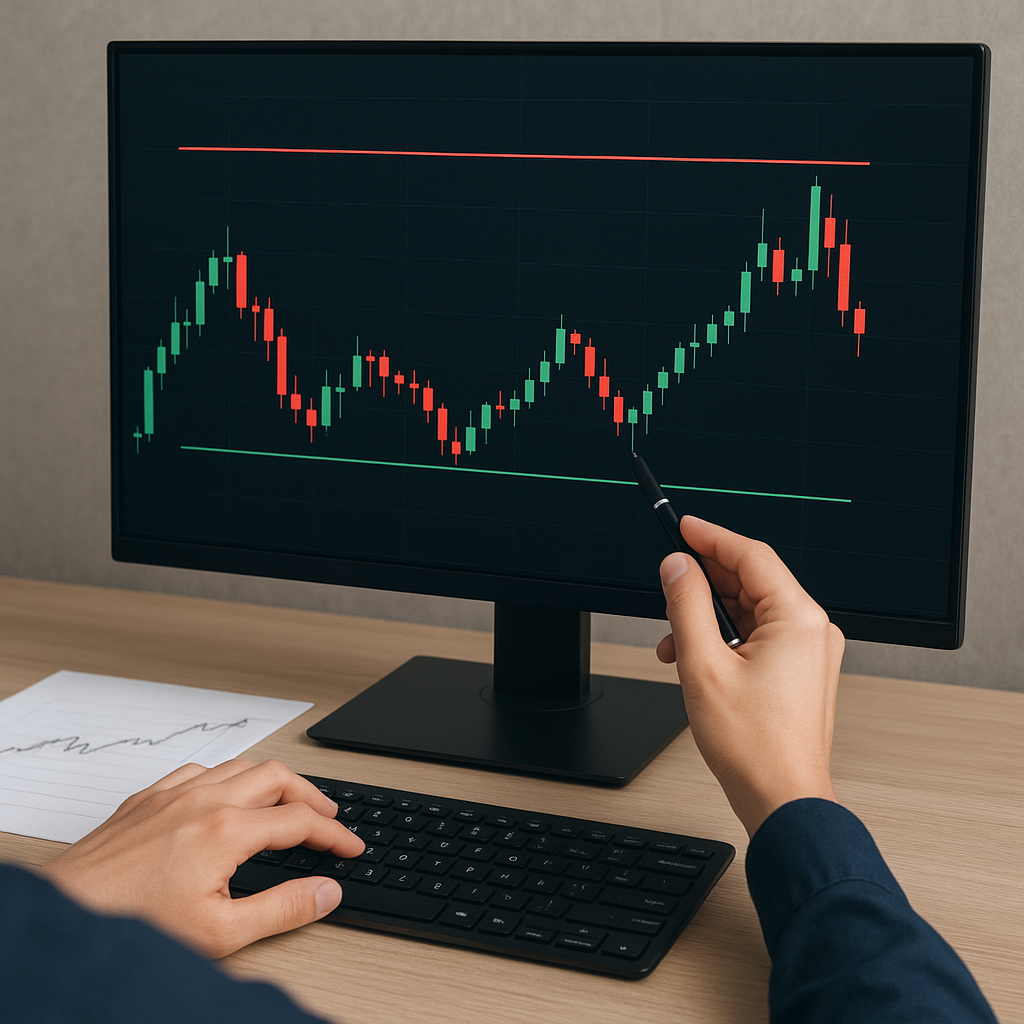
The foreign exchange market often presents traders with distinct trends, but equally common are periods when currency pairs oscillate within well-defined boundaries. Learning how to profit from these sideways movements can significantly enhance your overall performance. Range-bound trading demands a keen eye for market dynamics, disciplined execution, and a firm grasp of technical tools.
Identifying Range-Bound Markets
Before deploying any strategy, you must accurately recognize a market that is trading sideways rather than trending. A range-bound market is characterized by repeated bounces between a zone of support on the bottom and a zone of resistance on top. Identifying these zones helps you determine where price may reverse, offering potential entry and exit points.
Key Characteristics of a Trading Range
- Price repeatedly touches the upper boundary without making a sustained move higher.
- Price repeatedly tests the lower boundary without breaking lower.
- Average True Range or other volatility metrics show declining or stable values.
- Volume often diminishes near the edges of the range, hinting at weakening impulses.
Essential Tools for Spotting Ranges
Technical traders often rely on horizontal lines, price action patterns, and indicators to confirm a sideways phase. Popular instruments include:
- Moving Averages (to gauge lack of clear directional bias)
- Stochastic or RSI oscillators (to pinpoint overbought or oversold levels within the range)
- Bollinger Bands (narrowing bands often prelude extended sideways price action)
A simple approach is to draw two parallel horizontal lines at prominent swing highs and lows on your chart. When price respects these levels at least twice on each side, you likely have a valid range.
Strategies for Trading Ranges
Once a range is firmly established, the goal is to buy near the bottom and sell near the top. However, that apparent simplicity hides nuances. Proper execution requires attention to entry signals, stop placement, position sizing, and exit rules.
Buying the Bottom and Selling the Top
Look for candlestick patterns or price action signals—such as hammers, bullish engulfing at support, or improvised reversals—when price approaches the lower boundary. Conversely, bearish engulfing or shooting stars near resistance may signal good shorting opportunities. Confirmation from an oscillators or volume divergence can improve your success rate.
Range Breakout Fade
In volatile moments, price sometimes pokes outside the established boundaries before reversing. This phenomenon, known as a false breakout or “poke-and-reversal,” offers a second edge. To exploit it:
- Wait for a breakout candle closing beyond support or resistance.
- Confirm with quick re-entry inside the range on the next candle.
- Enter against the breakout direction with a stop just beyond the extreme of the breakout candle.
This approach banks on trapped traders and temporary spikes in volatility.
Range Riding and Scaling
Experienced traders sometimes scale into positions gradually. For instance, buy half your desired size at the lower boundary, then add to the position when a momentum indicator picks up. This strategy allows you to secure a favorable average entry price while maintaining flexibility near the median of the range.
Risk Management and Psychology
Even the most precise range-trading plan fails without strict risk controls and the proper mindset. Markets can break out suddenly, turning a series of small winners into a significant loser.
Stop Loss and Position Sizing
- Place your stop loss a few pips beyond the opposite side of the range. This accounts for noise without giving the market room to run away.
- Calculate position size so that a stop-out costs no more than 1–2% of your trading capital.
- Adjust your lot size if the range width expands or contracts to keep risk consistent across trades.
Maintaining Discipline
Patience is critical. You may watch the price hug the range boundaries for days before a valid signal appears. Avoid forcing trades. Wait for clear price action, momentum confirmation, or a convincing oscillator cross. These elements provide the confirmation you need to act with conviction.
Dealing with Breakouts
Sometimes price will genuinely break out of the range, signaling a new trend. Rather than fighting the breakout, plan to:
- Close or reduce positions that rely on the range continuing.
- Switch to a breakout-based strategy to follow the emerging trend.
Advanced Considerations
Once you’ve mastered basic range techniques, you can refine your edge using multi-timeframe analysis, correlation studies, and order-flow insights.
Multi-Timeframe Alignment
Check the same currency pair on higher timeframes to ensure you’re not trading counter to a dominant trend. A pair might appear range-bound on an hourly chart but be trending on the daily. Aligning timeframes increases your probability of success. For instance, use the daily chart to confirm broader sideways structure and the 15-minute chart for pinpoint entry.
Currency Correlations
Pairs often move together or in opposition due to shared economic drivers. By monitoring correlated pairs, you can spot hidden clues. If EUR/USD and GBP/USD both approach support simultaneously, the collective action may reinforce the range boundary’s strength.
Leveraging Market Sentiment
Commitment of Traders reports and COT data can reveal positioning extremes. When speculators are heavily positioned one way, a sustained range is more likely until they unwind. Use these insights to avoid chasing breakouts driven solely by speculative euphoria.
Adapting to Different timeframes
Ranges exist on all scales—from five-minute scalping windows to weekly consolidations. Choose the timeframe that matches your temperament. Shorter timeframes demand lightning-fast decisions and razor-tight risk management, while longer frames offer more breathing room but fewer trade opportunities.
Mastery of range-bound markets broadens your skill set and prepares you for sudden shifts into trending phases. By combining technical precision, disciplined risk controls, and a solid understanding of market psychology, you can transform sideways price action into consistent profits.