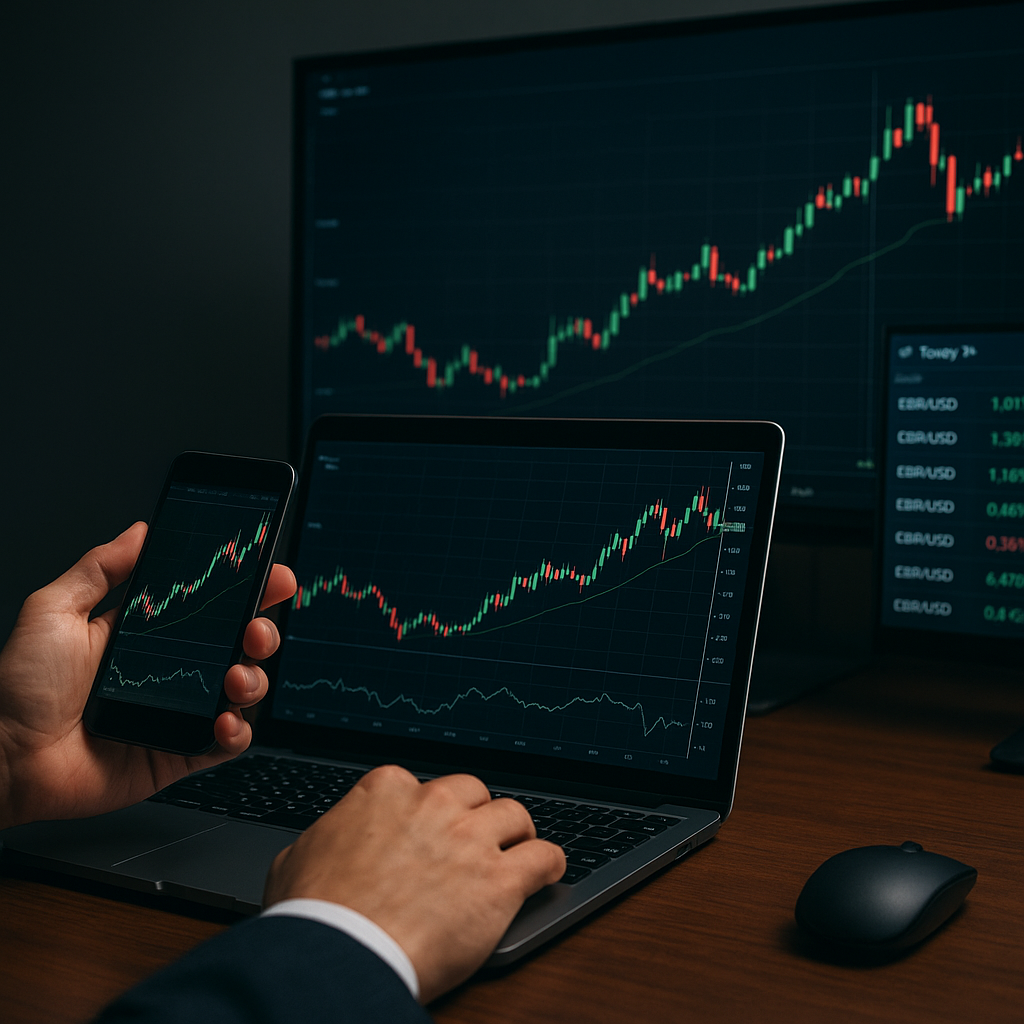
The foreign exchange market has continuously evolved, embracing cutting-edge technologies to stay ahead of global economic shifts. As traders seek faster, smarter solutions, the integration of artificial intelligence and machine learning is reshaping the landscape. From real-time algorithmic strategies to dynamic risk assessment tools, these innovations promise to enhance accuracy and efficiency. This exploration delves into key areas where AI and ML are driving transformative change in Forex, examining both current applications and future trajectories.
Evolution of Trading Technologies
In the early days, Forex transactions relied heavily on human intuition and manual execution. Telephone orders, physical trading floors, and hand-drawn charts defined the process. With the rise of electronic trading platforms in the late 20th century, latency diminished and accessibility soared. Traders gained the ability to monitor currency pairs from anywhere, executing high-frequency trades in milliseconds.
Today’s landscape marks a new era characterized by:
- Automated Execution: Algorithms execute trades based on predefined criteria, eliminating manual delays.
- Quantitative Models: Mathematical frameworks leveraging historic price data to forecast future movements.
- API Integration: Seamless connections between data feeds, analytical tools, and broker terminals.
By embedding intelligent systems into these components, market participants are witnessing unprecedented precision in identifying market inefficiencies and implementing targeted strategies.
AI-Powered Trading Strategies
Predictive Analytics and Pattern Recognition
Machine learning algorithms excel at parsing enormous datasets, spotting subtle patterns that human analysts might overlook. Techniques such as neural networks and deep learning models process historical price movements, economic indicators, and news sentiment. The result is a predictive layer that anticipates short-term shifts in currency valuations.
- Supervised learning models are trained on labeled data, learning to classify bullish or bearish conditions.
- Unsupervised clustering uncovers hidden relationships among currency pairs, interest rates, and geopolitical events.
- Reinforcement learning agents adapt in real time, refining strategies by simulating thousands of market scenarios.
Such systems can dynamically adjust entry and exit points, continuously evolving as new information emerges. Traders leveraging these tools often report lower drawdowns and improved profitability.
Sentiment Analysis and Alternative Data
Beyond price charts, AI models ingest a broad spectrum of data sources—social media feeds, central bank communications, and economic reports. Natural language processing (NLP) techniques assign sentiment scores to news articles or tweets, quantifying market mood. When combined with technical signals, this enriched dataset improves the timing and reliability of trade signals.
- Real-time sentiment dashboards display spikes in market anxiety or optimism.
- Event-driven models trigger automated orders when sentiment thresholds are crossed.
- Alternative data, such as satellite shipping metrics, offer early warnings about global trade flows affecting currency valuations.
Machine Learning for Risk Management
Dynamic Position Sizing
Risk control remains paramount in Forex. Traditional methods often apply static leverage limits or fixed stop-loss levels. However, machine learning introduces adaptive risk frameworks that tailor exposure to prevailing volatility and correlation structures.
- Time-series volatility models adjust position sizes in real time, shrinking exposure during turbulent periods.
- Portfolio optimization algorithms rebalance across currency baskets, minimizing drawdown risk.
- Anomaly detection flags suspicious price moves, enabling preemptive risk mitigation.
Compliance and Fraud Detection
Regulatory obligations in Forex demand rigorous monitoring of transaction flows and client behavior. AI-driven compliance systems sift through millions of trades, identifying patterns indicative of market abuse or money laundering. This automation reduces false positives and ensures prompt reporting to oversight bodies.
- Graph-based models map networks of transactions, revealing hidden connections among counterparties.
- Decision trees and ensemble methods classify suspicious activities with high accuracy.
- Automated alerts enable compliance teams to intervene swiftly, maintaining market integrity.
Regulatory Considerations and Ethical AI
The integration of artificial intelligence in Forex introduces complex challenges around transparency and fairness. Machine learning models can be opaque, making it difficult to justify decisions to regulators or clients. Ensuring responsible AI deployment involves:
- Explainable models that provide interpretable insights into trade recommendations.
- Rigorous backtesting frameworks to validate model performance across diverse market regimes.
- Data governance policies safeguarding sensitive financial information and preventing bias.
Regulators are increasingly focusing on algorithmic accountability, mandating documentation of model logic and audit trails. Firms that proactively adopt these standards gain a competitive edge and foster trust among stakeholders.
Emerging Trends and Future Directions
Looking ahead, the convergence of AI with other advanced technologies promises to further revolutionize Forex:
- Quantum Computing: Accelerating complex optimizations for portfolio construction and scenario analysis.
- Distributed Ledger Technology: Enhancing transparency in trade settlement and reducing counterparty risk.
- Edge AI: Deploying inference engines on local devices for ultra-low latency execution in high-frequency environments.
Collaborative platforms powered by AI will enable cross-border teams to co-develop strategies in a secure, decentralized framework. As these innovations mature, the line between human intuition and machine precision will continue to blur, driving the next wave of growth in global currency markets.